Prevention
Adult safeguarding is about protecting adults’ right to live safely, free from abuse, neglect, and exploitation. Prevention sits at the heart of effective safeguarding, focusing on early action, awareness, and support to reduce the risk of harm before it occurs.
By promoting dignity, choice, an d wellbeing, safeguarding prevention empowers individuals, families, communities, and professionals to recognise risks, challenge unacceptable behaviour, and respond appropriately to concerns. A strong preventative approach helps create environments where adults feel safe, respected, and confident to speak up.
Preventing abuse and neglect means identifying potential risks early, supporting people to make informed choices, and strengthening protective factors such as community connections, resilience, and access to services.
Safeguarding is not just about reacting when harm has occurred, it is about building a culture of vigilance, respect, and accountability that keeps people safe every day.
When to Take Action
If you are worried about the safety or wellbeing of an adult, it is always better to act early. Concerns do not have to involve immediate danger to be raised. Early action can prevent situations from escalating.
If you’re concerned about an adult’s safety, find out how to raise a safeguarding concern
This video Safeguarding Adults - Looking Out For Each Other To Prevent Abuse which has been produced by the Social Care Institute for Excellence, can be helpful to highlight what the local community can do to protect themselves and those they care about.
Read more from SCIE on Preventing abuse and neglect of adults with care and support needs - SCIE
What helps to Prevent Abuse and Neglect?
Prevention works best when people:
- Feel informed
- Are connected to others
- Can access support early
This includes awareness, learning, and community support.
Recognising Abuse and Neglect
Everyone needs to be able to recognise if what you are see or hear is potential abuse or neglect.
There are many forms and ways that adult abuse and neglect can occur. Adult abuse is also often complex involving more than one type of abuse occurring at any one time.
The Lewisham Safeguarding Adults Board offer Free Online Adult Safeguarding Foundation Level Training Sessions to everyone who would like to know more about Adult Safeguarding.
The aim of these online sessions is to provide an introduction to adult safeguarding by outlining the legal framework, definitions and principles that are used, and by explaining the content of the Lewisham Adult Safeguarding Pathway which includes key local and national resources.
This training is also ideal is for new staff, volunteers, or for those needing a refresher on Adult Safeguarding.
Find out more about the most common forms and signs of abuse.
Raising Community Awareness
As well as the training we offer, we also have a range of awareness raising adult safeguarding resources that can be used in all community settings. Including, posters, leaflets (available in a range of languages) and workbooks.
Take a look at the resources available to help you raise awareness of adult safeguarding in the community.
Staying Connected and Not Feeling Alone
Being connected to others reduces the risk of harm and isolation.
Local Support and Advice Services for Adults

Age UK Lewisham and Southwark Age UK Lewisham and Southwark
Age UK Lewisham and Southwark exist to improve the lives of older people in the London Boroughs of Lewisham and Southwark, working towards a future in which older people are valued, safe and empowered to make choices about their lives.
Age UK Lewisham and Southwark aim to empower and enable older people to lead fulfilled lives by:
- Providing services and support that address poverty and isolation
- Protecting the human rights of local older people
- Promoting health and wellbeing
- Connecting older people with their communities
- Working positively with partners across all sectors
Find out how Age UK Lewisham can help you.
Feeling lonely or isolated? - Age UK Silver Line The Silver Line Helpline | Age UK
As we get older, we may find we spend more time on our own. This can sometimes feel lonely, boring or make us miss friends or family.
Age UK's The Silver Line Helpline is a free, confidential telephone service that offers friendship, conversation and support to older people – 24 hours a day, 365 days a year.
They offer friendship, conversation, and support for people aged 55 or over, especially those who may be experiencing feelings of loneliness and isolation.
Find out more about the Silver Line

Community Connections Breaking Isolation Video
Watch Community Connections film Breaking Social Isolation to see how they tackle loneliness and social isolation in Lewisham.
Community Connections Lewisham are able to connect you with groups, activities and services in your local community that can support your health and wellbeing, bringing Lewisham to you!
You can phone them on 0330 058 3464, from 9:30am-4pm Monday-Friday (*except Thursdays when our line is open from 2-4pm). You can also get in touch using their online referral form, or visit the Thursday Morning Drop In.
Looking After Mental Health and Wellbeing
Good mental wellbeing helps people make safer choices and seek help when needed.

The Lewisham Community Wellbeing Hub provides timely, targeted support to help people across the diverse communities in Lewisham to manage their mental health. Their aim is to provide people with the tools, resources and links to local services to improve their wellbeing and resilience in the long term, through the support of their experienced and skilled staff team. The service is open to anyone over 18 who lives in the London Borough of Lewisham, has experienced challenges with their mental health and who wants to improve their wellbeing.
The service provides time-limited one to one practical sessions for residents in Lewisham to develop strong self-care practices, maintain their wellbeing and feel able to be a part of the local community.
Find out more about the Lewisham Community Wellbeing Hub
Download the Lewisham Community Wellbeing Hub Leaflet
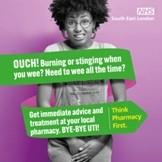
Look after your health with Pharmacy First
Pharmacists can offer advice on a range of illnesses, such as coughs, colds, sore throats, ear infections and aches and pains.
They can also give advice about medicines. This includes how to use your medicine, worries about side effects or any other questions you have.
Most pharmacies can also offer prescription medicine for some conditions, without you needing to see a GP or make an appointment. This is called Pharmacy First.
Conditions they can offer prescription medicine for are:
- impetigo (aged 1 year and over)
- infected insect bites (aged 1 year and over)
- earache (aged 1 to 17 years)
- sore throat (aged 5 years and over)
- sinusitis (aged 12 years and over)
- urinary tract infections (UTIs) (women aged 16 to 64 years)
- shingles (aged 18 years and over)
If you are not within these age ranges, a pharmacist can still offer advice and support decisions about self care treatment with over the counter medicines, but you may need to see a GP for treatment.
If you go to a pharmacy with one of these conditions, the pharmacist will offer you advice, treatment or refer you to a GP or other health professional if needed. They will also update your GP health record, but your information will not be shared with anyone else.
Think pharmacy first and get seen by your local community pharmacy team.
For more information, visit nhs.uk/thinkpharmacyfirst
Staying Physically Healthy and Independent
Good physical health reduces risk and supports independence.

Get an NHS Health Check
The NHS Health Check is a free check-up of the health of your heart and blood vessels (cardiovascular health). It can tell you whether you're at higher risk of getting certain health problems, such as:
During the check-up you'll discuss how to reduce your risk of these conditions.
If you're aged over 65, you'll also be told about symptoms of dementia to look out for, as some types of dementia have the same risk factors as these conditions. You can also be given details of local services that help with dementia.
Who is the NHS Health Check for?
The check is for people who are aged 40 to 74 who do not have any of the following pre-existing conditions:
- heart disease
- chronic kidney disease
- diabetes
- high blood pressure (hypertension)
- atrial fibrillation
- transient ischaemic attack
- inherited high cholesterol (familial hypercholesterolemia)
- heart failure
- peripheral arterial disease
- stroke
- currently being prescribed medicines such as statins to lower cholesterol
- previous checks have found that you have a 20% or higher risk of getting cardiovascular disease over the next 10 years
You should be offered regular check-ups if you have already been diagnosed with one of these conditions. Your care team will be able to give you more information about this.
How do I get an NHS Health Check?
If you're aged 40 to 74 and do not have a pre-existing health condition, you should be invited to an NHS Health Check by your GP or local council every 5 years.
If you have not been invited for an NHS Health Check and think you're eligible, contact your GP to arrange an appointment.
For more information visit NHS Health Check - NHS
Addressing Known Risk Factors

Drugs and alcohol
If you or someone you care about is struggling with drugs or alcohol, it can feel upsetting, confusing and exhausting. You’re not alone, and support is available for both you and them.
You can’t control someone else’s choices but helping them take a step towards the right support can make a real difference. Just as importantly, it’s okay to ask for help for yourself too, caring for someone can take a toll.
There are local services in the borough that offer friendly, confidential advice. Some also provide extra support for carers, family members and partners, including counselling and wellbeing support.
Find out more about Drug and Alcohol Services in Lewisham.

Independent Age - Advice and support for older age
Independent Age have some great advice on what can cause falls, what you can do if you do fall and where to find out further information.
Falls and how to avoid them
Lewisham Community Falls Service
Lewisham and Greenwich NHS Trust offer a Community Falls Service which you can refer yourself to, or you can also access the service via referral from your GP.
Reducing Known Risks
Some issues can increase the risk of harm if left unsupported.
Lewisham Council
Sport and Leisure
See what sports facilities are available in the borough and check if you're eligible for discounts on leisure activities.
Your local arts
Find out about local arts activities including theatres, cinemas, dance classes, choirs and public art.
Lewisham Libraries
Sports or the Arts not your interest? Lewisham Libraries has lots of activities and groups, including Cat Bytes for help with using digital devices, sound bath sessions for relaxation.
Local Support and Advice Services for Carers
If you help another person who needs support to live in their home then you may be a Carer. The person you care for could be mentally or physically disabled, ill or elderly and frail. They could be your parent, child, partner, relative or friend.
We have a whole Carers section on our website, including explanations of the different types of abuse, and local services which provide support information and advice to carers.

London Fire Brigade - Home Fire Safety Checker
You can get tailored advice for your home, or the home of someone you care for direct from the London Fire Brigade.
Our tool allows you to carry out a thorough check of the home in only a few minutes. It’s simple and practical – giving specific advice tailored to your circumstances and your home.
Get started with the Home Fire Safety Checker

Metropolitan Police- Lewisham - Personal safety: how to stay safe
Tips and advice on keeping yourself protected from crime from pickpocketing and personal robbery to harassment and dealing with violent situations.
It also includes advice on things that you can do to help others feel safe.
Protect yourself from fraud and cyber crime with Report Fraud.
How much do you really know about fraud and cyber crime? Report Fraud has lots of helpful information and advice on how to keep you safe. If you’ve been affected by any kind of cyber crime or fraud and live in England, Wales or Northern Ireland, Report Fraud are the people you need to speak to. They will help you report to the police, learn about how to prevent it, and get the support you need.
The LSAB has a Scams Information and Advice webpage with explanations on all the different types of scams and fraud that criminals can use. It also has useful advice and the services that exist locally that can help if you have been a victim of fraud.
In conjunction with our Board Partner, Lewisham Speaking Up, we have also produced a SCAM’s Eady Read Booklet.
Read and download the Scams Easy Read Booklet
The Role of Advocacy in Prevention
Advocacy is a vital part of safeguarding prevention. It helps ensure that adults are supported to express their views, understand information, and participate fully in decisions that affect their lives.
Advocates can support adults to:
- Understand their rights and safeguarding processes
- Express their wishes, views, and feelings
- Make informed choices about their safety and wellbeing
- Challenge decisions or actions they do not agree with
- Access services and support at an early stage
By helping people to speak up and be heard, advocacy can prevent concerns from escalating and reduce the risk of abuse or neglect.
Where to get Advocacy Support
Individual organisations will know the communication needs of their client groups, and as such are best placed to provide bespoke adult safeguarding information in the most appropriate formats, methods and languages.
LSAB 7 Minute Briefing - Statutory Advocacy

POhWER provide the statutory Lewisham Advocacy Service to support residents with a variety of issues, where there may be difficulties with communication or understanding information.
Find out more about the Lewisham Advocacy Service Leaflet.
Lewisham Speaking Up is an advocacy organisation based in the London Borough of Lewisham. They pride themselves in supporting people with learning disabilities to speak up, be heard and have a stronger voice. They work together to bring about the changes people want and need. They strive to get better and fairer treatment for all people with learning disabilities.
They have two service areas:
- Self-Advocacy
- 1-2-1 Advocacy
These services work together to maximise the help they give to people. As an organisation they genuinely value and listen to the people they support and they work hard on their behalf to get their views and wishes taken into account.
Their vision is for a society where people with learning disabilities are listened to, recognised, respected and included in all decisions about their lives.
Find out more about Lewisham Speaking Up and the services they offer.
Watch this introductory video from Lewisham Speaking Up

The Lewisham Refugee & Migrant Network (LRMN) believe that everyone should be able to live safely in a place where they can thrive and be part of the community. LRMN has helped thousands of people seeking sanctuary to do just that, rebuild their lives and to do so with dignity.
LRMN provides essential advice helping people resolve issues around immigration, housing and welfare benefits. Their services are open to people facing destitution, homelessness and have no access to public safety nets. Their offer includes advice on
- Immigration
- Housing and Welfare
- Access to HealthCare
- Advocacy
They are also able to provide information and support on Wellbeing and Emergency Support.
Find out more about the Lewisham Refugee & Migrant Network

Safer Recruitment
Safer recruitment is about keeping adults safe when we recruit staff or volunteers. It means thinking about safeguarding at every stage of the process, so we reduce the risk of taking on someone who isn’t suitable to work with adults who have care and support needs.
This includes having clear checks in place and knowing what to do if concerns arise later on. From the start, roles and adverts should make it clear that the organisation takes safeguarding seriously.
When choosing someone, the aim is to find the best fit for the role while being fair to everyone. At the same time, it’s important to make sure people understand their safeguarding responsibilities and that anyone unsuitable is not appointed.
Find out more about Check someone's criminal record as an employer
You are not on your own
Safeguarding prevention is everyone’s business.
If you:
- Need advice
- Want to talk something through
- Are worried about yourself or someone else
Help and support are available, and asking early can prevent problems from growing.
Find out more about the help and support available in Lewisham.